Support the Podcast

Want to support the podcast? You can do so here:

Monday, June 20, 2011

Israel in Egypt – Historical Fact or Later Fiction? Part 2


Israel in Egypt – Historical Fact or Later Fiction?
Part 2


I will here be continuing the argumentation that Israel in Egypt and the Exodus cycle was not a late priestly invention but was a historical reality. You can find part 1 of this article in the link directly above. 

1.      The intentional lack of a proper name for the Pharaoh during the Moses cycle reveals an earlier Egyptian form of polemics, rather than a later Babylonian or Assyrian one.
a.       It has been long debated whether or not the omission of Pharaoh’s name in the Moses cycle was accidental (due to ignorance) or intentional. Considering the evidence listed above, IF the Moses cycle was a product of a returning scribe in the middle of the First Millennium he would have been unlike any writer before or after until the modern era in the light of his massive and complex knowledge of socio-rhetorical devices, linguistical structures, centuries past etymologies, and various historical and cultural nuances. Should we really expect that a writer literally 2000 years ahead of his time (who knew methods of historical analysis that we didn’t even invent until the 20th century) would simply forget a main character’s name?
b.      In light of this, many scholars have come to think that the omission of the Pharaoh’s name in the exodus tradition to be an intentional polemical device. It is no accident that in the same narrative that the reader learns the personal name of the Hebrew God (YHWH) and how powerful he is, that his arch rival in the story is left anonymous and shown to be totally impotent in the events.
c.       This was a very common (almost universal) polemical device used during the New Kingdom and found in many inscriptions. (We find good examples of this in the annuls of Thutmose III, Amenhotep II, and Seti I during the Ramisside period).
                                                              i.      It was used to show the total domination of one’s enemies. They were shown to be dominated by being omitted by name from history (a funny modern illustration can be seen in Harry Potter’s “he who is not to be named”).
d.      If the narratives were written later during the First Millennium after Israel returned to the land and its scribes had all been educated in Babylonian or Assyrian courts, then we should expect the narrative to reflect their practice later titled by historians as “damnatio memoriae” – literally, damnation of memory. In this practice the conquered enemies names would be meticulously kept on record and would often be written on pots and dashed to the ground – symbolically demolishing them.
                                                              i.      This practice was almost universal in all Assyrian, Babylonian and Aramean texts and only developed very late in Egyptian history.
                                                            ii.      In fact we find in later Biblical traditions (such as Kings and Chronicles) that were written contemporaneous with Babylon and Assyria that we find the scrupulous record keeping of the defeated kings of Israel. So we find the two traditions (that of the exodus and that of the monarchy) actually using the polemical devices that were common during their time of composition.
2.      The details of the opposition of the Hebrews dovetails well with the traditional dating and of its political climate.
a.       We know that during early to middle Second Millennium (ca 2000-1400BCE), large numbers of Semites were present in Egypt not only due to famine and drought in the land but also as a result of military captivity. Egypt was literally teeming with Semitic immigrants. These conditions simply did not exist to such a degree after the expulsion of the Hyksos. For The children of Abraham to migrate to Egypt to escape famine in Canaan would have been common faire during that time period but would have been out of place during the later post-exile period.
b.      There is a strange comment in Exodus 12:38 that says a “mixed multitude” went up with Israel. This is most likely a reference to the large number of other Semites who joined with Israel and likely converted to Judaism in response to the mighty works of YHWH. This would also explain why Israel went from being quite small to a powerhouse so rapidly. We sometimes are fooled by the later legal pronouncements of God to not comingle with other Semitic tribes and assume that this was always the case. But we have to remember that the Exodus event and the giving of the law following WERE the nationalizing events and would have included this “mixed multitude” who came up out of Egypt with the children of Abraham. It may not be too far off to say that proto-Israel was actual a melting pot of many different Semitic people. (This may also explain the some of the obscure dietary and custom laws that would need to be put in place to conform outsiders to their new tribe.)
c.       Moses request for the Israelites to have time off to worship their God was actually common practice during this period. He was actually quite right to reasonably expect Pharaoh to give his people a furlough to go and worship. It would have been actually quite culturally shocking that the request was not initially granted.
d.      I do not identify the Hyksos with the Hebrews (nor the Apiru – lit. habiru) but we do know that after the Hyksos expulsion, Semites were commonly viewed as possible subversives. We now have evidence of massive building projects during the 18th dynasty following the expulsion of the Hyksos in their previous territory of Avaris/Pi-Ramesses. It is unquestioned that Semites were the primary labor force for these building projects.
3.      Many words in Exodus cycle are clearly Egyptian in their etymology, something that we would not expect if the texts were written centuries later by authors trained in Babylonian and Assyrian culture.
English                                    Hebrew                                   Egyptian
a.       “Basket”                                  tebat                                        db3t
b.      “papyrus”                                gome                                      km3
c.       “pitch”                                    zapet                                        dft/sft
d.      “reeds”                                   sup                                           twfy
e.       “river”                                     haye’or                                    itrw
                                                              i.      What is so interesting about this one is that the normal Hebrew word for river (nahar) is not used but rather haye’or is used which is a transliteration of the Egyptian word itrw. In fact the absence of the t from the Hebrew transliteration poses even further proof for an early composition because the omission of the t would match perfectly with the 18th Dynasty vocalization that was no longer used in the middle of the First Millennium. So how would a post-exile Jewish scribe know how to transliterate into Hebrew a specific Egyptian vocalization from 1000 years before?
f.       River’s “brink”                        sapah                                       spt
                                                              i.      This one is also interesting because again the Hebrew is not one of the the normal words for a river bank or edge (yad, peh/panim, gadah or qaseh) but is a transliteration of one commonly used in Second Millennium Egyptian specifically for the edge of the Nile. (This same oddity also occurs in the Joseph cycle at Genesis 41:3 and 17)

There will be much more to follow.

Sunday, June 5, 2011

The Noetic Affects and Effects of Sin and Grace

Directed Study - The Noetic Affects and Effects of Sin and Grace

Wednesday, June 1, 2011

Even Now - A Poem

Even Now

By Tyler Vela


Even now sit I In rags of waste
Garments stained, Prayers in haste
Eyes afoul, Lips unclean
Wayward heart and envy green
But even so, with death drawn near
My head is high, I have no fear
For if my soul should lose its way
I have this hope, No deep dismay
The Lord of hosts in heaven crowned
Sin cast out and justice found
A feeble man no more am I
All find rest in vast supply
So I’ll tarry here for my time
Until I’m called to joy sublime
And if you must seek me out
Follow the fold amongst the devout
And there be I in humbled state
Til my Lord ends my wait
So singeth I my song of love
For the Glorious God, Christ above


Sunday, May 29, 2011

Did Jesus Predict the Rapture within 40 Years of his Death? Part 2


The Problem of “γενεὰ αὕτη” (“this generation”) and
πάντα ταῦτα” (“these things”) in Matthew 24
Part 2 – Sensus Plenior and Progressive Revelation


Introduction

Before I continue on with an examination of the specific passage under discussion, it seems necessary to take a step back and make some methodological and theological qualifications that will be of significant importance to our examination of the text. While entire books can and have been written on the topics of this section of our discussion, due to the limited space my treatment of it here will be almost hopelessly brief. However we simply cannot proceed any further without at least an introductory knowledge of these topics.

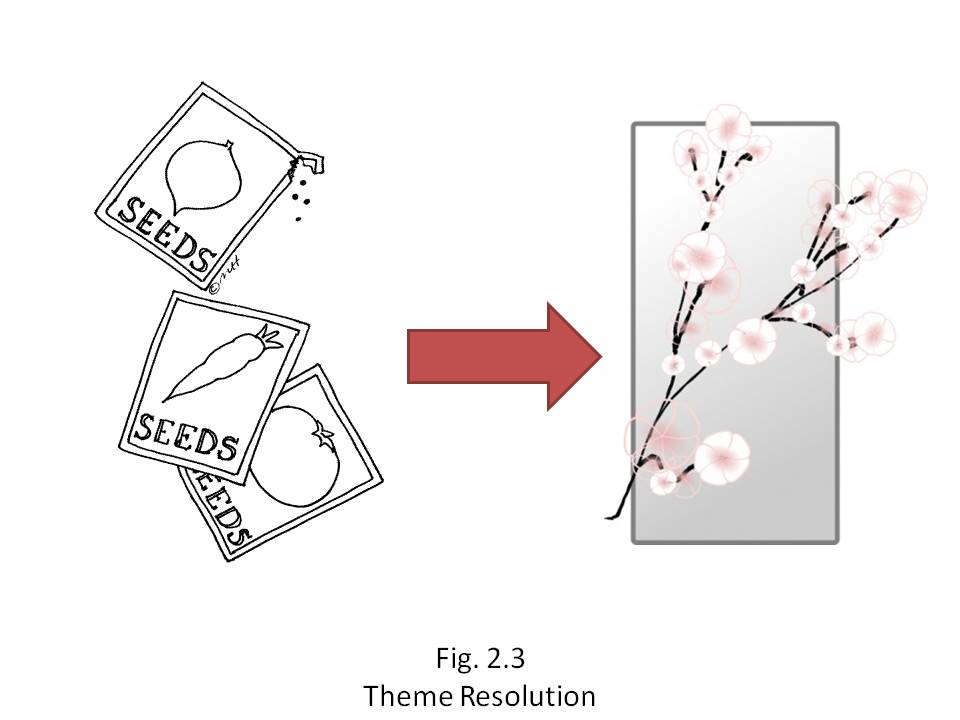
Within hermeneutics (the art and science of interpretation) theologians have long recognized the literary use of typology in Hebrew literature. While it is present and even prevalent in other texts besides the Bible, one simply cannot adequately read the Bible without recognizing the wide spread, and often foundational uses of sensus plenior in types (shadows), theme resolution, and double fulfillment. The import of these various hermeneutical methods may not be immediately clear until they are applied in further sections of this series. Since I am seeking brevity to a degree, this section will primarily involve some brief definitions and then several examples from Biblical passages to illustrate their usage.


Progressive Revelation

Genesis 3:15 has long been dubbed the Proto-Evangelion, which translates to the “first gospel.” However useful this title is for this specific verse is beside the point. What is of importance to our discussion here is that it is a prime example of what Christians mean when we talk about progressive revelation. Genesis 3:15 reads,

15 And I will put enmity
Between you and the woman,
And between your seed and her seed;
He shall bruise you on the head,
And you shall bruise him on the heel.

Here we find God pronouncing his judgment on the serpent for his role in instigating the fall of humanity into sin and death. This curse is at the same time immediate and eschatological. It is like a judge pounding his hammer in sentencing capital punishment, but without reference to the date of execution. From this day forth the serpent is on death row, desperately raging against the dying of the light. Christians have long seen this as the very first Biblical proclamation of the victory that will be achieved by Jesus’ death on the cross. They notice that it will be a human (seed of the woman) who will be the final victor over Satan. And while the serpent may bruise the heel of Christ (when he dies for a time) it will ultimately be that very heel that crushes the head the of the serpent. Yet what we notice instantly from a passage like this is that not everything that can be said is mentioned about this struggle between the powers and principalities of this world and the people of God throughout history. Not everything that can be said about the reason for or the outcome of the death and resurrection of Jesus can be found within Genesis 3:15. It makes no mention of the substitutionary nature of the atonement, the sheer grace of God’s election, justification or sanctification of believers. Nothing is said to the effect that we are only saved by grace, through faith, and not by works. In fact, the proto-evangelion is only a slightest foreshadow of the later reality, the most minute taste of the what is to come. Yet it is vitally important to driving the narrative of redemption of the first Adam to the second. It propels the story forward as the people of God, languishing under sin, death and condemnation, constantly look to the hills for the first sign of the coming savior, the seed of the woman who was promised, the Anointed One, the Christ.

And it is in this propulsion that the concept of progressive revelation is most prominent. We see that God did not desire to reveal everything that there is to know about himself, about us, about the cosmos, about sin and death and redemption. In fact, what we find over and over is that God is God who is pleased to address his people in their historic context, condescend to speak to them in language accessible to them, and to reveal as much of himself as is needed to guide the people of that time forward toward redemption. We must remember that there was a time when not everyone had the full counsel of a complete Bible to inform their lives. They lived at a certain time in history in which the world was viewed entirely differently than how we view it today. The ancient world had different views of the nature of the cosmos, the meaning of life, the priorities of daily life, of government, religion, culture, and even a fundamentally different worldview. For example, it becomes almost impossible for us to understand the world of Genesis 1 through the functional ontology of the time, because we are so steeped in a modern, scientifically driven material ontology.

This is all to say that God spoke to people where they were. He did not require them to change their cognitive structures, worldviews, or cultures in an instant just to understand who God was, what humanity’s place in the cosmos was, and what God was doing in history. When missionaries go into other cultures they often have to “contextualize” their message in order to effectively minister in a foreign culture. This means that they must find a way to communicate using that culture’s language, history, worldview and iconography but maintain the core message that they want to convey. We could say that God was the ultimate contextualizer. God did not give lectures about everything that a person would need to know about the nature of the universe, of matter, of disease, of evolution, of science, art, literature, morality, etc. God gave us stories. And in a sense, a story can more easily endure, transcend, motivate and undermine any one culture to appreciated the world over.

This then brings us to our main area of discussion for this section. That God, being the grand author, the one who saw redemptive history from beginning to end, like a master story crafter, sets certain balls in motion that will find fuller significance later in the story. This really is a sign of a master literary mind. How often have you marveled when reading your favorite book or watching your favorite movie, that you notice something that seemed so trivial or at least less than profound coming to a full blossom at the dénouement of the story; when all loose ends are fastened and all questions answered. Even the stories that end with a mystery, a question, a new quest for the truth, are so powerful because they have been building toward such a conclusion – the quest, the question itself had been there the entire time, lurking in the shadows; growing, building, gaining speed and significance. This is the difference between stories where the climax fails, at which we are angered to have wasted our time on the story, and the ones that the ending question excites us to delve into the story again in a perpetual quest for answers that we know will never come. It is only when we realize that the story itself is fully expressed in the quest, that it all points to the fact that in the end there will be no finish line, just another bend in the road, that we fully appreciate these stories.

Should it not surprise us then that the Bible, “the greatest story ever told,” should have elements of both? That a theme or an image or event that seemed to have one significance early in the story should come to full blossom to another in its climax? But that it would also lead us so powerfully to a quest? To unanswered questions? Is it not fitting that Revelation, the final book in the canon, should be so littered with Old Testament imagery that the only way to really understand it is to start over at the beginning of the narrative, when God created the heavens and earth that came to renewal at the close of Revelation?

Before moving on we should note however that progressive revelation is not quite the same as an evolved revelation. It does not mean that what is said early in the story evolves or changes as the story progresses. As we will see, what can be considered a type will go unmentioned for nearly the entire canon before it gets picked up again. It does not go through changes. It is simply planted, germinates, then blossoms in its full splendor later on. It also does not mean that God will say one thing early in the narrative, change his mind, and say something later. While some skeptics want to say that the Bible will often contradict previous statements, I am fairly convinced that this is simply not the case, and I have never been presented with any veridical examples of it. (The examples are often given by those of very little education in material they are addressing, following a total lack or even explicit rejection of study of the historical, cultural, theological and linguistic contexts of the passage, based on inexcusably shallow interpretations of the ENGLISH text, and without any awareness of their own ineptitude.)


Sensus Plenior

Sensus plenior (SP) in Bible is actually a kind of umbrella category for the other terms that will follow as they are more specific applications of SP. Sensus plenior is a latin term that means, literally, “fuller sense” or “deeper meaning” and is used to refer to those passages that speak of a person(s), event, or theme that has an immediate meaning in its original context but that looks beyond them to a fuller or deeper realization, recapitulation, application or resolution in a future person(s) or event. While some definitions treat these meanings are primary and secondary meaning, I find these categories to be less than helpful since the secondary (plenary) meaning often has a more weighty importance in the overall scope of the Bible.

SP is often expressed in terms of typology, theme-resolution, and double fulfillment. Here I will only be giving a brief definition of each followed by an example or two for each. I recognize that entire books can and have been written on these issues and that the extent to which we should observe each of these in Scripture is hotly debated, and thus am under no delusion that the remainder of this section will be a sufficient treatment of these topics. What I am hoping for however is simply to present the concepts as they will be employed in our later discussion of Jesus’ statements in Matthew 24 and other passages we will explore.

Two major expressions of SP are typology and double fulfillment. (There are others such as theme fulfillment, metaphor, etc. but we are only concerned to address these two here.)

1.      Typology
a.       A prior person, place or event is the prototype or indicator of a future antitype. Theologians also talk in terms of “shadow” and “fulfillment” when addressing these passages.
b.      Examples:
                                                              i.      Adam – This is a common example and one that Paul in Romans 5 himself teases out. We see that while Adam was the first human to enter into a covenantal relationship with God, that Jesus is the fulfillment of that. Where Adam broke the covenant and brought death to all those whom he represented in the covenant of works after him, Jesus succeeded and brought life to all those whom he represented in the covenant of redemption. Adam’s failure as a covenant breaker, pointed toward the need for a covenant keeper. Adam as the bringer of death, pointed toward one who would be the bringer of life.
                                                            ii.      Israel – Where Israel wandered and failed for 40 years in the desert, Jesus was directed and succeeded in the wilderness for 40 days. Where the Israelites sinned in their disdain for the bread that God had provided for them, Jesus succeeded in his love for the bread (the word of God) that he had been provided. Where Israel was called like a “son” by God when called from Egypt (Hosea 11:1-4), Jesus was God’s son whom was called as a child out of Egypt.
                                                          iii.      Prophet, Priest and King – A prophet was one who spoke to the people for God. Jesus spoke to the people as God. A priest was one who interceded for the people before God, Jesus interceded as God for the people. A priest needed to atone for themselves before they brought an offering to God that was imperfect and would only suffice for a time. Jesus was the perfect priest who needed no cleansing or atonement for himself and who offered the perfect sacrifice once and for all. The king ruled over Israel under the guidance of God in attempt to bring about justice and righteousness but only ruled for a time, and often unsuccessfully. Jesus is the eternal king who rules as God in perfect justice and righteousness.  


2.      Double Fulfillment
a.       A statement, prophecy or theme may have not only an immediate application but will also have perpetual later application as history unfolds. A common illustration given to show what is meant here is that of a mountain range. In fig. 2.4 we see first a mountain from a great distance. It appears to be far off but when we draw closer we find that it is not only one mountain, but a range of mountains. So with double fulfillment it is that the author may see only one fulfillment when they pen their verses, but as history unfolds we find that there may be several actualized fulfillments of the verse. What is important to note here however is that contained within the original contexts of the passages are hints that it is referring to more than one fulfillment.
b.      Examples
                                                              i.      Immanuel. In Isaiah 7 we find this statement: 4Therefore the Lord himself will give you a sign. Behold, the virgin shall conceive and bear a son, and shall call his name Immanuel. 15He shall eat curds and honey when he knows how to refuse the evil and choose the good. 16 For before the boy knows how to refuse the evil and choose the good, the land whose two kings you dread will be deserted. 17 The LORD will bring upon you and upon your people and upon your father’s house such days as have not come since the day that Ephraim departed from Judah—the king of Assyria."
Many people have done wonderful work on full expositions of this text and I myself preached an entire sermon on it (listen to it here: http://logical-theism.blogspot.com/2010/08/ahaz-at-crossroads-isaiah-71-17.html). Here I am simply going to state that the Immanuel child was likely a child born to the prophet prior to Judah’s fall to the Assyrian King Tiglath Pileser III.  Yet when we look at the passage we can see that this child could not have been the only referent of the passage. As we keep reading further down past the citation above, we see that the child points to another child, another Immanuel. Not a child who would show us “Immanuel” (“God with us”) but a child who would actually be Immanuel. A child who would be God come to dwell among us. (Incidentally this points us also to the significance of the tabernacle. God would dwell with his people in the tabernacle, but would later quite literally dwell with his people in the person of Jesus.)
                                                            ii.      The abomination that causes desolation. Daniel 9:27 says, And he will make a firm covenant with the many for one week, but in the middle of the week he will put a stop to sacrifice and grain offering; and on the wing of abominations will come one who makes desolate, even until a complete destruction, one that is decreed, is poured out on the one who makes desolate.” While commentators go back and forth about what is actually meant, what they all agree on is that what is being referred to is an act that is considered “unclean” by the Jews being performed in the temple. This text will be vital to our later discussion so I will be very brief here, but we can ask, when was this or will it be fulfilled? Well some want to say that it refers to Antiochus IV Epiphanes in the mid-second century BCE. Antiochus had set up an alter to Zeus in the Second Temple and then to add insult to injury, sacrificed a pig on the alter of God sometime around 167 BCE. Other scholars point to a similar incident with the Romans who destroyed Jerusalem and set up the standards of the Emperor (considered by many to be divine) in the temple courts. Other scholars would look a few years previous to Nero, while others look to a future Antichrist who will fit the bill. Some see it in Hitler, others Stalin, some Bin Ladin. Others think he has yet to be identified. The problem here is that each of these commentators is looking for one and only one fulfillment While it is possible that none of these are the events that Daniel was referring to, it is possible that each of these (admittedly more drastic than the previous one) are growing fulfillments of the passage? In fact when we look at John’s 1st epistle we see that he does not have in his mind one single Antichrist but says that “it is the last hour, and as you have heard that antichrist is coming, so now many antichrists have come” (1 John 2:18). Does this mean that John does not think that there will not be one final and antitypal antichrist? Not at all. But it does show that John is comfortable identifying many fulfillments of the antichrist motif. It is possible that he has Antiochus, Nero, the Roman armies and a future Antichrist in mind.

Now that we have examined (though admittedly extremely briefly) these concepts, we will be prepared in our next section to begin our examination of the interpretation of the Olivet Discourse in Matthew 24 that I find to be most compelling; not because it simply “works” to save an inerrantist view of the Bible, but because it is the most plausible interpretation given the theology, hermeneutic, and worldview of a 1st century Jewish teacher like Jesus.

In the following sections I will be arguing that Jesus did intend his statements to be fulfilled within approximately 40 years but that what he was referring to was not his Second Coming or the end of the world, but to the coming of the kingdom of God as expressed in the judgment and destruction of the temple in CE 70. In addition, Jesus most likely was using typology and double fulfillment to point beyond these events to fuller and more complete realizations of these events. As he was warning his listeners to be prepared and well equipped for the end of Jerusalem which they could see the signs for and be ready for (thus the warning to head to the hills which would be utterly futile at the end of the world), how much more so should they attempt to prepare their souls for the final coming of Jesus to usher in culmination of all redemptive history? I intend to show that Jesus did not falsely predict anything, but was rather using an event such as the judgment on Jerusalem to point beyond itself to a greater eschatological reality.

For further study on these topics I recommend the following books:

The Shadow of Christ in the Law of Moses by Vern Poythress
Preaching the Whole Bible as Christian Scripture by Graeme Goldsworthy
Gospel Centered Hermeneutics by Graeme Goldsworthy
Knowing Scripture by R.C. Sproul
Look to the Rock by Alec Motyer
Primary and Plenary Sense by F.F. Bruce (article) http://www.biblicalstudies.org.uk/pdf/plenary-sense_bruce.pdf


Friday, May 27, 2011

Israel in Egypt – Historical Fact or Later Fiction? Part 1


Israel in Egypt – Historical Fact or Later Fiction?
Part 1

After listening to the recent episode of the Imaginary Friends Show podcast that I was a guess on, I have received many comments from my friends here on facebook. Many of them have been very encouraging and appreciative of my comments on the show. Others have been challenging in their comments – both from Christians and Atheists. But one of the most common questions that people have been asking me is concerning the section on this history of Israel. I was surprised by many of the comments usually for one of two reasons. They either seemed blissfully unaware that any real problems existed in the dating of the composition of the Exodus narrative (let alone in the historicity of a proto-Israel outside of the Levant), or they thought it was such an open and shut case that the narratives were composed in the late First Millennium and that the Biblical accounts were total fabrications. Both extremes seem totally out of touch with the research on the issue.

In response to these questions/comments, I will be spending several sections dedicated to explaining why I believe in the historicity of the Egypt/Exodus narrative and hold to the traditional early dating of their compositions. This does not mean that I do not recognize that there are difficulties in adopting such a position. I simply think the weight of the evidence is in that direction.

Before I begin I want to also deal with one objection that I know will be raised against my overall method and then state one presupposition that I will be working off of. The objection is that because I believe the Bible already that I am simply arguing in a circle in order to affirm the Bible. I think that any commonsense reading of what I am about to present will refute that claim on its own, but I would also like to specifically state that I am giving arguments here for exactly WHY I believe the Biblical accounts. We Christians are commonly asked for “evidence” for why we believe what we believe. It is to that end that I wish to attempt to achieve in these next few notes. I will not be arguing that the Bible is true because it is inspired or anything of that nature – but rather that the accounts are historically reliable, composed at the traditional early dates and accord with everything we know about the Ancient Near East (ANE) during that time frame. I think this objection is more ideologically driven against anyone who attempts to defend the Bible in any manner and is not substantive in the slightest.

The presupposition that I will be working with is one that I think any historian or any student of history will have no problem conceding. That presupposition is merely that ancient writers are not modern writers. It seems somewhat redundant and unnecessary to make this point explicitly but let me hash it out a little bit. By this assumption I mean to imply several things. Firstly, the ancient writer should be understood to write within the confines of normal literary structures that were contemporaneous with their culture and should not be forced to keep a standard of modern historiography our journalistic exactitude (if we can even say that is accomplished today). This means that the ancient author should be read according to his original authorial intent within the structures of literature at the time – including factors such as genre, context (historical, cultural, political, etc), themes, polemics, rhetoric, etc. Secondly, is that ancient writers did not spend 4 years for an undergraduate degree, several years for a Masters, even countless more for a PhD or post doctorate work, all focused on the historical insights of centuries of historical study, archeology, epigraphy, onomasiology, etc. They would have been almost completely unaware of the cultural practices, linguistical structures, etymologies, rhetorical devices, etc. from generations past of their own culture, let alone centuries removed from another culture. This will come into play most dramatically when we realize that a late First Millennium Hebrew scribe would have known next to nothing about the finer nuances of Second Intermediate or Empire Age Egyptian culture, politics, rhetoric, polemical devices, culture, etc.

Let me also list my sources for the next few notes that I will be composing on this subject. I will primarily be relying on the following texts (though this list is not even close to being exhaustive)

ed. Block, Darrell. Israel: Ancient Kingdom or Late Invention (collection of essays)
Currid, John. Ancient Egypt and the Old Testament.   
Hoffmeier, James. Israel in Egypt.
Kitchen, Kenneth A. On The Reliability of the Old Testament.
ed. Long, Baker, and Wenham. Windows into Old Testament History.

None of these books are really “page turners” and are sometimes quite technical and dry – which may explain the endurance of the leftist extreme who rejects all arguments for the traditional dating as passé. Though this may also be due to the limited range of “evidence” allowed to be part of the discussion. Many of you who listened to the episode will undoubtedly remember Jake’s comments about the total lack of “shits” found in the Sinai desert. While the discussion was not nearly deep enough to evaluate Jake’s range of acceptable evidences, what I commonly find is that many skeptics will preclude many arguments that do not rely solely on empirically verifiable “evidences”. However, any trained in historical study knows that while these kinds of evidences are great, they are rarer than we think. Yet historical study moves on just fine due to the many other kinds of evidences are arguments available to us.

And now let us look at some of these evidences. Many of them will be of the kind that I call “dovetail” evidence. That is, that the cumulative evidence is better explained by one context than others. For much of this we will see that an earlier Second Intermediate Period or Empire Period Egyptian context fits the composition of the Egypt/Exodus narrative rather than a later post-exilic one.

1.      Source criticism is being strongly reexamined and often abandoned in favor or more literary approaches to the text.
a.       When someone now tries to tout source criticism as if it is gospel truth and not what it really is these days (a theory in crisis) they reveal a reliance of quite outdated research and information. We can find good examples of this in the works of such scholars as Charles Isbell, Gordon Davies, G. Fischer, Thomas Thompson, etc.
                                                              i.      In fact speaking of source theory, Thompson says that it is “no longer sufficient to maintain such a radical interpretation of narrative, one which carries us so far from any immediate reading of the text.” (Thompson, Origin Tradition. p155)
b.      We have come to find that key words, themes, and whole narrative “units” OFTEN cross the boundaries set down by traditional source critics.


2.      There was a massive influx of Semites into Egypt during the Old Kingdom (ca. 2190BCE) to the Second Intermediate Period (ca. 1786-1550 BCE).
a.       Epigraphic and archeological evidence all point to the fact this massive immigration to Egypt from the Levant was to seek relief from drought and famine in Canaan. (we will also see later that there was also some who were brought during this period as military captives).
b.      If a later date is assumed (commonly suggested to be post-exile during the mid to late First Millennium) there seems to be no corresponding period in which the narrative would dovetail with these historical conditions. After the expulsion of the Hyksos at the end of the Seventeenth Dynasty, there seems to be a drastic decline in Semetic presence with no other possible periods of massive migration to Egypt that would correspond to the Biblical events. These massive levels of Semitic presence in Egypt and the  common pattern of migration to escape drought and famine correspond nicely with the “Patriarchical period” of Israel’s history.

3.       Onomasiology (the study of names) reveals that the names used in the Joseph/Moses/Exodus cycles are clearly Egyptian in etymology (though their exact etymological roots are not always agreed upon) and some are only present in their forms during the Second Intermediate and Empire Periods.
a.       Examples are: 
                                                              i.      Potiphar
                                                            ii.      Asenath
                                                          iii.      Zaphenath-paneah
                                                          iv.      Hartummim (the “magicians”)

4.      Joseph’s title as ruler over Egypt had no known comparative during Israel’s monarchy – but was present during the Second Intermediate and Empire Periods in Egypt.

5.      The use of the city names “Rameses” and “Raameses” almost a Millennia after the delta capital was abandoned in 1100 BCE would make little to no sense.

6.      Joseph was bought as a slave for 20 shekels.
a.       The average slave price during the first half of the second millennium was 20 shekels. During the second half of the second millennium, due to inflation, the average price was 30 shekels. By the middle of the first millennium (when many critics want to place the composition of exodus) the average price was between 50 to 60 shekels. Should we expect that the author redacted his own narrative to account for inflation just to try and fool historians that he did not know would ever exist nearly 3000 years later?

These are just an introductory handful of examples. I will be going through my notes that I have made in the past in the sources I listed above and will be compiling a more comprehensive list as I go. But I hope this will be a good start for those who were interested in this topic. There is much more to come.

For Part 2: http://freedthinkerpodcast.blogspot.com/2011/06/israel-in-egypt-historical-fact-or.html